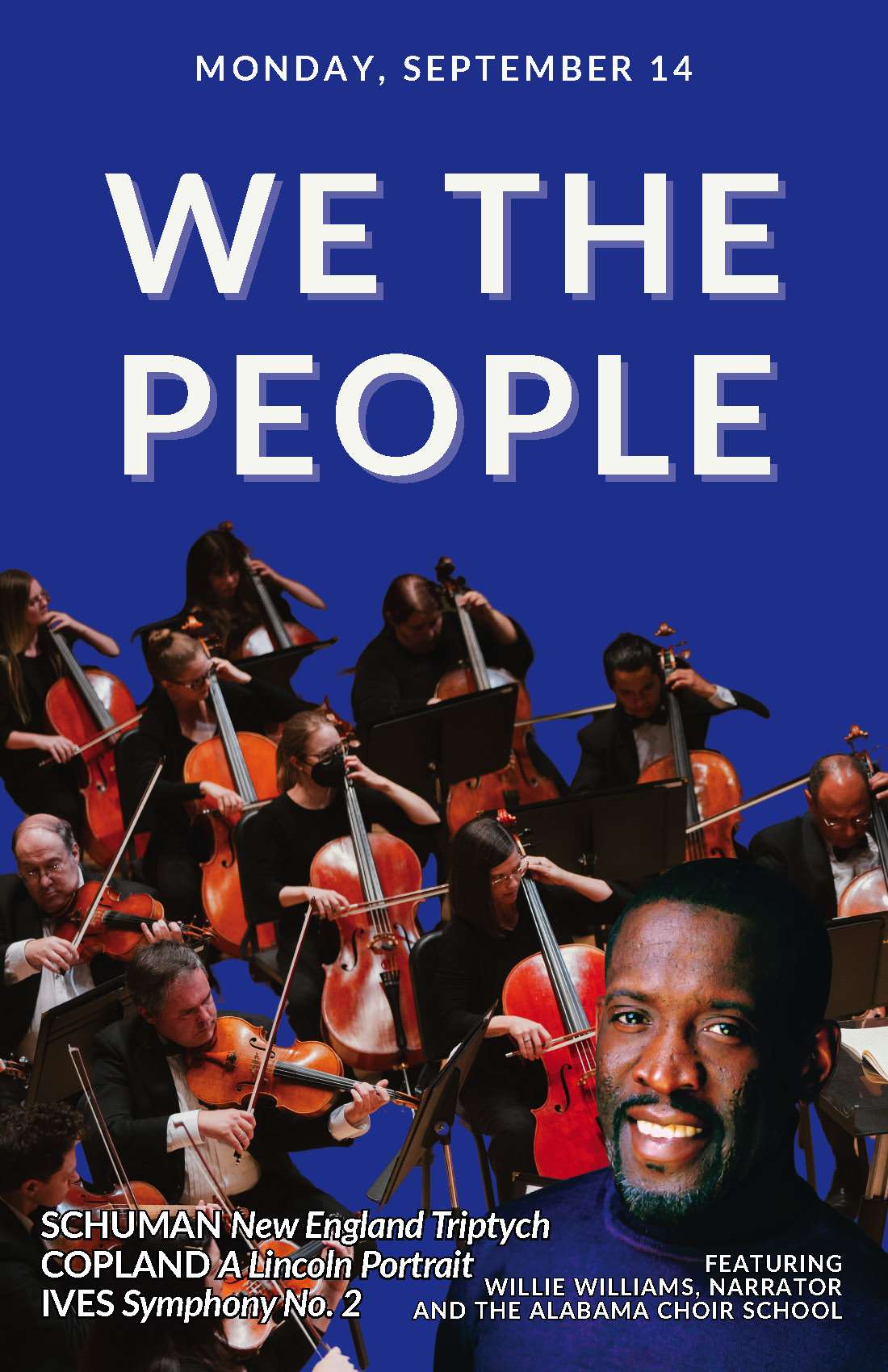
TSO opens its season with an all-American program
Willie Williams narrates Copland’s A Lincoln Portrait, paired with Schuman’s New England Triptych and Ives’s Symphony No. 2, with the Alabama Choir School joining the orchestra. The concert opens a season built entirely around the 250th anniversary of the United States.
New England Triptych
William Schuman’s New England Triptych (1956) is one of the landmark orchestral works of twentieth-century American music. Subtitled Three Pieces for Orchestra after William Billings, the work pays tribute to the Revolutionary-era composer William Billings, whose hymns and patriotic songs provided Schuman with the musical foundation for the piece. Schuman, an influential American composer and arts administrator who served as president of both the Juilliard School and Lincoln Center, admired Billings for the rugged individuality and patriotic spirit embedded in his music. Rather than composing simple arrangements or variations, Schuman described the work as a “fusion of styles and musical language,” blending eighteenth-century melodies with a modern orchestral voice.
The opening movement, “Be Glad Then, America,” begins with a striking solo timpani introduction before unfolding into energetic brass fanfares, contrapuntal writing, and jubilant climaxes drawn from Billings’ anthem of the same name. In contrast, the central movement, “When Jesus Wept,” offers a moment of quiet introspection. Based on Billings’ simple canon, Schuman preserves the hymn’s directness while surrounding it with rich twentieth-century harmonies and somber orchestral colors, particularly in the woodwinds and muted percussion. The movement’s restrained emotional intensity provides a dramatic contrast to the outer sections of the work.
The final movement, “Chester,” is the best known of the three and has become one of the most recognizable works in the American orchestral and wind band repertories. Billings originally composed “Chester” during the Revolutionary War era, and its tune quickly became associated with patriotic fervor and the spirit of independence. Schuman transforms the hymn into a brilliant set of orchestral variations that move from solemn chorale textures to exuberant, march-like celebration. Throughout the Triptych, Schuman captures both the historical character of early American music and the bold sonorities of the modern orchestra, creating a work that is at once reflective, powerful, and unmistakably American.
A Lincoln Portrait
Aaron Copland’s Lincoln Portrait (1942) stands among the most iconic works in American orchestral literature, combining narration and music in a tribute to President Abraham Lincoln and the democratic ideals he represented. The work was commissioned by conductor André Kostelanetz during World War II as part of a series celebrating notable Americans. Copland, already known for creating a distinctly American musical style, chose Lincoln as his subject and drew the narration directly from Lincoln’s speeches and letters. To evoke the sound and spirit of nineteenth-century America, Copland incorporated familiar folk melodies, including “Camptown Races” and “Springfield Mountain,” weaving them into a broad and noble orchestral landscape.
The composition unfolds in three connected sections, moving from quiet reflection to expansive patriotic grandeur. Copland described his goal as suggesting “the mysterious sense of fatality” surrounding Lincoln’s personality while maintaining musical simplicity and directness. The score alternates between pastoral Americana and powerful orchestral climaxes, creating an atmosphere that is both intimate and monumental. Unlike a traditional tone poem, Lincoln Portrait culminates with a spoken narration delivered over the orchestra, a feature that has allowed countless distinguished public figures, actors, and civic leaders to serve as narrator in performances over the decades.
The narration itself consists of excerpts from Lincoln’s speeches, including passages from the Lincoln-Douglas debates and the Gettysburg Address. These words, paired with Copland’s sweeping orchestration, transform the work into both a musical tribute and a meditation on democracy, sacrifice, and national unity.
Text:
Fellow citizens, we cannot escape history. We of this congress and this administration will be remembered in spite of ourselves. No personal significance or insignificance can spare one or another of us. The fiery trial through which we pass will light us down in honor or dishonor to the latest generation. We, even we here, hold the power and bear the responsibility.
The dogmas of the quiet past are inadequate to the stormy present. The occasion is piled high with difficulty and we must rise with the occasion. As our case is new, so we must think anew and act anew. We must disenthrall ourselves and then we shall save our country.
It is the eternal struggle between two principles, right and wrong, throughout the world. It is the same spirit that says ‘you toil and work and earn bread, and I’ll eat it.’ No matter in what shape it comes, whether from the mouth of a king who seeks to bestride the people of his own nation, and live by the fruit of their labor, or from one race of men as an apology for enslaving another race, it is the same tyrannical principle.
As I would not be a slave, so I would not be a master. This expresses my idea of democracy. Whatever differs from this, to the extent of the difference, is no democracy.
That from these honored dead we take increased devotion to that cause for which they gave the last full measure of devotion. That we here highly resolve that these dead shall not have died in vain. That this nation under God shall have a new birth of freedom and that government of the people, by the people, and for the people shall not perish from the earth.
Symphony No. 2
Charles Ives’s Symphony No. 2 occupies a unique place in American music history, blending the traditions of the European symphony with the sounds of American vernacular culture. Composed between 1897 and 1902 while Ives was in his twenties, the work reflects both his formal training at Yale University and his fascination with hymns, folk songs, patriotic tunes, and marching-band music heard during his New England upbringing. Although rooted in the symphonic traditions of Beethoven, Brahms, and Dvořák, the piece already reveals Ives’s unmistakably American voice through its collage-like quotations and unexpected harmonic turns. Remarkably, the symphony was not premiered until 1951, nearly fifty years after its completion, when Leonard Bernstein conducted the New York Philharmonic in a landmark performance.
Structured in five movements rather than the traditional four, the symphony moves between lyricism, humor, nostalgia, and exuberance. Throughout the work, Ives weaves fragments of familiar melodies into the orchestral texture, often allowing tunes to emerge and disappear as if recalled from memory. Listeners may recognize references to songs such as “Camptown Races,” “Turkey in the Straw,” “Bringing in the Sheaves,” and “America the Beautiful,” alongside allusions to Beethoven, Wagner, Bach, and Brahms. Rather than presenting these quotations straightforwardly, Ives transforms them into a richly layered musical tapestry that evokes the soundscape of American life at the turn of the twentieth century—church gatherings, town bands, parlor songs, and patriotic celebrations existing simultaneously in musical conversation.
The finale culminates in one of the most famous endings in orchestral music. After building toward what appears to be a triumphant conclusion, Ives abruptly interrupts the expected resolution with a startling dissonant chord—described by the composer as “any old note, good and loud.” The moment captures both Ives’s irreverent humor and his willingness to challenge convention while still embracing the traditions from which he emerged. In Symphony No. 2, Ives creates a distinctly American symphonic voice: one that honors European forms yet celebrates the vitality, diversity, and unpredictability of American musical life.
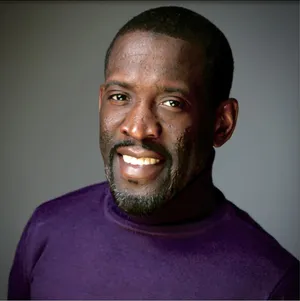
Tuscaloosa-raised musician-actor-activist Willie Williams will be the voice of Dr. Martin Luther King Jr., in Monday’s Tuscaloosa Symphony Orchestra season-ender, during Joseph Schwanter’s Pulitzer Prize-winning piece New Morning for the World.
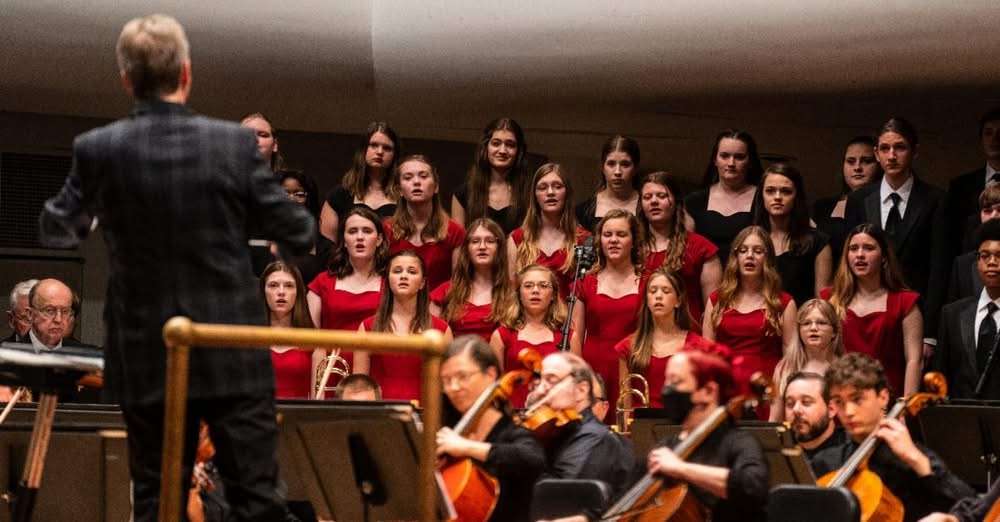
The Alabama Choir School nurtures and inspires student achievement with quality music education in the pursuit of artistic and personal excellence through choral performances on local, national, and international stages.
Secure your Season Subscription before it's too late!